

Fashion & Wholesale Blog
Insights, trend updates, and expert buying guides for independent boutique owners.
The 2026 outerwear market will reward products that balance protection, comfort, and visual clarity. Global buyers are watching lightweight insulation, modular layering, cropped utility jackets, polished trench coats, and softer technical shells. These directions reflect changing climates, urban mobility, and demand for longer product use.
Women's Outerwear is becoming more adaptable. A water-resistant coat may need to perform during sudden rain, crowded commutes, and mild winter days. Buyers should examine seam construction, fabric recovery, lining breathability, pocket placement, and repair potential. Color also matters. Mineral brown, storm blue, muted olive, and warm ivory can support broader retail planning. Bright accents still attract attention, but they may create slower sell-through in conservative markets.
Trend forecaster Lidewij Edelkoort has said, “The future of fashion is not about fashion, but about culture.” That idea gives this forecast practical value. Outerwear must reflect local weather, work habits, movement, and cultural preferences. Reliable sourcing requires more than attractive samples. Buyers should request test reports, fiber details, care instructions, and transparent production information. Regional compliance requirements also deserve early review.
No trend forecast is perfect. Consumer behavior can shift quickly. Some oversized silhouettes may feel impractical, especially for smaller stores or warmer regions. The strongest collections will combine clear design stories with measurable performance. They will leave room for correction, not simply follow a runway image. This guide explores the key 2026 Women's Outerwear opportunities for global buyers, while recognizing that real customers remain the final test.
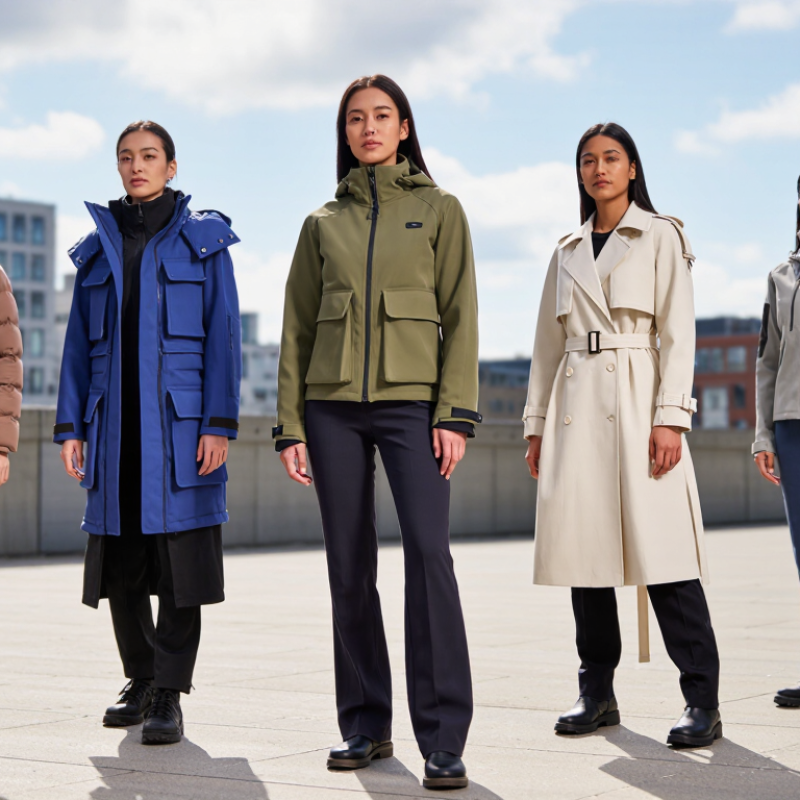
2026 Women’s Outerwear Market Overview
The 2026 women’s outerwear market is becoming more regional, practical, and weather-focused. Global buyers are requesting versatile coats that suit commuting, travel, and changing temperatures. Lightweight insulated jackets, cropped utility styles, long tailored coats, and weather-resistant parkas remain strong commercial options.
From sourcing experience, buyers now examine fabric performance before surface appearance. Recycled polyester, responsibly sourced wool, and water-repellent finishes attract attention, but claims require reliable documentation. Customers also expect softer linings, adjustable hoods, secure pockets, and comfortable movement. Small details matter. A beautiful coat can still fail if its zipper catches or its sleeves restrict driving.
Market demand is not identical across regions. Northern Europe favors insulation and wind protection, while warmer cities prefer breathable layers and removable padding. In North America, relaxed silhouettes and durable fabrics continue to support larger order programs. Asian urban markets often respond well to compact designs and clean construction. Forecasting remains imperfect. Color predictions can miss suddenly, especially when weather patterns change. Buyers should test limited quantities, review return feedback, and compare performance after repeated washing. Clear fiber content, care instructions, size measurements, and factory quality records also reduce purchasing risk. Consistent inspection is essential.
| Trend / Market Dimension | 2026 Planning Signal | Recommended Product Direction | Buyer Priority | Commercial Opportunity | Evidence / Reference Basis |
|---|---|---|---|---|---|
| Lightweight Transitional Layers | High Demand Suitable for wider seasonal and geographic use |
Packable windbreakers, lightweight trench coats, shirt jackets, thin quilted jackets, and water-resistant overshirts | High | Supports early-spring, autumn, travel, and mild-winter assortments with lower freight volume | Weather variability and warmer average temperatures are increasing the relevance of versatile layering products. The World Meteorological Organization confirmed 2024 as the warmest year on record. |
| Weather-Protective Performance | Core Growth Area Function is moving from specialist to everyday fashion |
Water-repellent shells, breathable membranes, wind-resistant fabrics, adjustable hoods, taped seams, and storm cuffs | High | Enables higher perceived value without relying only on heavy insulation or complex decoration | Outdoor-inspired functionality remains relevant as consumers seek durable products for commuting, travel, and unpredictable weather. |
| Recycled and Preferred Fibers | Increasing Requirement Material traceability is becoming more important |
Recycled polyester or nylon, certified organic cotton, recycled wool blends, and documented fiber content | High | Improves sustainability positioning and supports retailer documentation requirements | Textile Exchange’s materials reporting identifies polyester as the largest synthetic fiber category and highlights the continued need to increase recycled and preferred-fiber adoption. |
| Circular and Repairable Design | Strategic Priority Longer product life is becoming a purchasing criterion |
Replaceable trims, spare buttons, repair kits, reinforced stress points, mono-material options, and detachable components | Medium–High | Reduces return and replacement pressure while supporting resale, repair, and take-back programs | European circular-economy policy is increasing attention on durability, reparability, recycled content, and product information. |
| Short and Cropped Silhouettes | Fashion Direction Strong for youth and contemporary assortments |
Cropped puffers, short utility jackets, waist-length bombers, cropped trenches, and boxy workwear shapes | Medium | Creates visual variety and supports higher outfit frequency across online and social-commerce channels | Shorter proportions continue to appear in global fashion forecasting and seasonal runway-to-retail direction; fit testing remains essential by market. |
| Relaxed and Oversized Fits | Commercially Stable Comfort remains important across age groups |
Relaxed parkas, cocoon coats, dropped shoulders, adjustable waists, and layering-friendly armholes | High | Improves cross-season layering and reduces fit risk when supported by clear garment measurements | Consumer preference for comfort and flexible styling continues to influence outerwear sizing and silhouette development. |
| Quiet Utility and Modular Details | Broad Appeal Function without excessive technical styling |
Hidden pockets, detachable hoods, two-way zippers, internal drawcords, convertible collars, and subtle reflective details | High | Balances practical value with everyday wearability for urban and travel consumers | Utility details are increasingly integrated into mainstream women’s apparel rather than limited to specialist outdoor products. |
| Neutral and Nature-Inspired Color | Low-Risk Base Useful for global core collections |
Black, navy, charcoal, stone, beige, olive, dark brown, and muted blue, supported by seasonal accent colors | High | Improves sell-through potential, simplifies replenishment, and supports multi-season carryover | Neutral colors generally offer stronger cross-market compatibility and lower fashion-obsolescence risk than highly seasonal colors. |
| Regional Assortment Adaptation | Required Climate and income differences remain significant |
Light shells and trench coats for warmer climates; padded jackets and wool-blend coats for colder markets; packable options for travel markets | High | Reduces overstock caused by applying one global product range to different climate zones | Outerwear demand is strongly influenced by local temperature, precipitation, urbanization, retail season timing, and household purchasing power. |
| Digital Product Information | Preparation Needed Traceability data should be collected early |
Digital style records covering fiber composition, country of manufacture, care instructions, recycled content evidence, and supplier documentation | High | Improves compliance readiness, buyer review, and consumer transparency across export markets | The European Union’s Ecodesign for Sustainable Products Regulation entered into force in July 2024 and provides the policy framework for future product-information and circularity requirements. |
| Indicative 2026 Assortment Mix | Buyer Planning Benchmark Not a reported market-share statistic |
25% lightweight transitional styles; 20% weather-protective jackets; 20% padded or insulated products; 15% tailored coats; 10% utility styles; 10% fashion-led statement pieces | Medium–High | Creates a balanced range between core volume, weather performance, and seasonal fashion risk | Planning benchmark created for assortment construction. Actual allocation should be adjusted using destination climate, channel data, historical sell-through, and target price. |
| Indicative Price Architecture | Three-Tier Structure Useful for multi-market buying |
Entry: basic woven jackets and light padding; Mid: improved fabric performance and construction; Premium: certified materials, advanced protection, and superior finishing | High | Allows buyers to cover value, mainstream, and premium demand without depending on one price segment | Price positioning varies by market, import duties, channel margin, fabric specification, labor content, and compliance cost; final pricing should be validated locally. |
| Quality-Control Focus | Critical Outerwear returns are often linked to construction issues |
Check seam strength, zipper performance, colorfastness, water-repellency durability, filling distribution, measurements, odor, and care-label accuracy | Very High | Protects margins by reducing defect claims, returns, negative reviews, and repeat-production issues | Quality-control requirements should be aligned with destination-market regulations, agreed specifications, laboratory testing, and approved samples. |
Reference sources:
- World Meteorological Organization, State of the Global Climate updates.
- Copernicus Climate Change Service, global temperature monitoring reports.
- Textile Exchange, Materials Market Report.
- European Union, Ecodesign for Sustainable Products Regulation, Regulation (EU) 2024/1781.
FAQS
Recycled nylon, compact cotton, and soft wool blends support light layering. They reduce bulk while keeping everyday comfort. Check abrasion resistance, colorfastness, and seam performance before ordering.
Stone, moss, cocoa, and deep navy suit several markets. Clay orange and icy blue can add controlled freshness. Compare colors in daylight and indoor lighting.
Matte surfaces work well for urban jackets and hide minor marks. They may look dull online. Strong product photography becomes important.
Adjustable cuffs, two-way zippers, hidden hoods, and inner pockets improve daily wear. Check zipper movement and pocket placement on physical samples. Small details expose weak construction.
Yes, climate and daily routines shape demand. Some buyers prefer lightweight insulation and relaxed fits. Others need weather resistance, shorter cuts, or breathable coverage.
Test small regional batches before wider production. Compare sleeve length, lining weight, and pocket placement. Review local feedback monthly. Runway reports can mislead.
Request fiber content, colorfastness, water-resistance, and seam-strength records. Verify recycled-content claims with reliable documentation. Testing matters more than attractive showroom samples.
Use a scorecard covering capacity, sample accuracy, lead time, packaging, and corrective-action speed. Request a final-fabric pre-production sample. Suppliers reporting delays early may prove more dependable.
Choose durable linings, repairable closures, and region-appropriate insulation. Ask about minimum orders and leftover-fabric plans. A low unit cost can become expensive.
No. Trial smaller orders and review seasonal feedback before expanding. Forecasting is imperfect. I have sometimes overvalued trend speed and underestimated replenishment risk.
Conclusion
The 2026 Women’s Outerwear market is expected to focus on versatile design, practical performance, and adaptable styling for different climates and lifestyles. Key silhouettes will include tailored wool coats, lightweight quilted jackets, cropped puffers, utility-inspired parkas, trench coats, and relaxed oversized layers. Buyers will also see growing demand for transitional pieces that can move easily between casual, work, travel, and outdoor settings.
Trending fabrics will balance comfort, durability, and responsible material choices, with recycled fibers, soft wool blends, technical nylon, water-resistant finishes, and breathable constructions gaining attention. Color directions will range from timeless neutrals and earthy tones to refined pastels and carefully selected seasonal accents. Functional details such as adjustable hoods, modular layering, secure pockets, lightweight insulation, and easy-care finishes will add value. Regional preferences will vary, making climate, cultural styling, sizing, and price sensitivity important sourcing factors. Successful 2026 collections should combine reliable quality, flexible designs, transparent production standards, and commercially practical assortments.