Fashion & Wholesale Blog
Insights, trend updates, and expert buying guides for independent boutique owners.
Top Animal Print Clothing Suppliers for Global Buyers
Table of Contents
- Animal Print Clothing and Its Place in the Global Apparel Market
- Types of Suppliers Serving Animal Print Clothing Buyers
- How to Evaluate Animal Print Clothing Suppliers
- Key Sourcing and Production Steps for Global Buyers
- Quality, Compliance, and Logistics in International Purchasing
- FAQS
- Conclusion
- Related Posts
Global buyers seeking dependable Animal Print Clothing suppliers must look beyond striking spots and stripes. They need consistent printing, reliable fabric quality, clear production details, and communication that holds up after sampling. A swatch can look vivid under showroom lights, then appear dull beside a window. Small differences matter.
Fashion designer Vivienne Westwood’s advice, “Buy less, choose well, make it last,” offers a useful lens for supplier selection. Her words concern thoughtful fashion choices, not a specific sourcing checklist. Still, they remind buyers to assess durability alongside appearance. Ask how suppliers control print placement, color consistency, stitching, and finishing. Request samples in the intended fabric, not just a digital image. Then compare the result with the approved reference. It sounds basic. It is often skipped.
This guide reviews suppliers serving international buyers, with attention to product range, customization, minimum order quantities, lead times, and quality assurance. These details can change by style, season, and order size, so published claims deserve confirmation. A supplier may offer many patterns but limited control over repeat alignment. That is not always a deal-breaker; it is a question to investigate. Use the comparisons as a starting point, verify current terms directly, and weigh visual appeal against practical performance. Animal Print Clothing should look distinctive on a rack and remain convincing after wear and care. That balance is harder than it seems.
Animal Print Clothing and Its Place in the Global Apparel Market
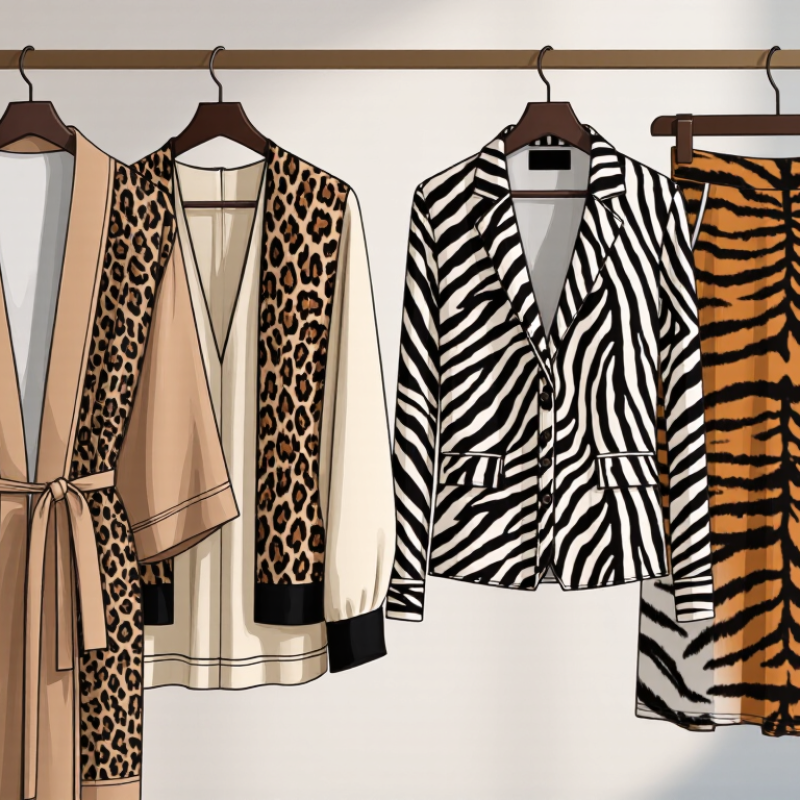
Animal print clothing occupies a distinctive, recurring place in the global apparel market. Leopard, zebra, and snake-inspired patterns appear in casualwear, occasion pieces, and seasonal collections. Their appeal is visual and immediate, but demand varies by region, age group, and retail channel. What sells well in one market may feel too bold in another.
For global buyers, planning starts with more than choosing a striking motif. Fabric weight, print scale, color accuracy, and placement all affect how a garment looks on a hanger and in motion. A small repeat can feel subtle on a blouse, while a large repeat may dominate a coat. Buyers should request physical samples and assess colors under neutral lighting. Digital images can hide flaws.
Supplier evaluation matters just as much. Ask about material composition, printing methods, production capacity, lead times, and quality checks. Confirm that repeat orders can maintain consistent shades and pattern alignment. Clear measurement charts and approved samples reduce avoidable disputes, though they cannot prevent every production variation. That is worth remembering. Animal print trends can cool quickly, so modest test orders and flexible replenishment may limit excess inventory. Still, overly cautious buying can miss a short-lived opportunity. The balance is not always easy.
Types of Suppliers Serving Animal Print Clothing Buyers
Full-package manufacturers manage fabric sourcing, pattern development, printing, sewing, and finishing under one roof. This can simplify communication for buyers developing coordinated animal print collections. Ask for a pre-production sample and confirm how the print will align across seams. A leopard pattern that shifts at the side seam may look less polished than expected.
Cut-and-sew factories suit buyers who already have fabrics, artwork, and technical specifications. They offer closer control over garment construction, but the buyer must coordinate more steps. Print specialists focus on transferring artwork onto fabric, using methods such as screen or digital printing. Request a wash-tested swatch. Color can change after treatment.
Wholesalers and stock-service suppliers usually offer ready-made styles with lower development demands. They may work well for quick assortment tests, though sizes and print options can be limited. Sourcing agents can connect buyers with suitable factories and help track samples, production details, and shipping updates. Their value depends on clear reporting. Small orders fit. No supplier type is perfect. Compare minimum quantities, fabric composition, color consistency, inspection procedures, and lead times before placing an order. A polished sample is useful, but it does not prove every production batch will match.
Top Animal Print Clothing Suppliers for Global Buyers - Types of Suppliers Serving Animal Print Clothing Buyers
| Supplier Type | Typical Offering | Best Suited Buyers | Typical Order Scale | Typical Production or Fulfillment Time | Key Buying Considerations |
|---|---|---|---|---|---|
| Full-package garment manufacturers | Manage fabric sourcing, printing or fabric selection, cutting, sewing, finishing, and packing. | Established retailers and importers seeking coordinated production from one supplier. | Often hundreds to several thousand pieces per style; minimums vary by fabric, print, and factory. | Commonly several weeks after sample approval and material confirmation. | Confirm print placement, color standards, size grading, inspection scope, and delivery terms. |
| Cut-make-trim (CMT) factories | Cut and sew buyer-supplied fabric, trims, patterns, or technical specifications. | Buyers with established designs and their own fabric or print suppliers. | Usually bulk orders; quantities depend on the factory’s capacity and production line. | Several weeks, depending on order size, material readiness, and construction complexity. | Clarify responsibility for fabric defects, shrinkage testing, trim sourcing, and wastage. |
| Private-label apparel manufacturers | Produce garments with buyer-selected labels, packaging, and, where available, custom prints or colorways. | Online brands, boutiques, and retailers developing exclusive collections. | Often a few hundred pieces per style, with higher minimums for custom fabrics or prints. | Typically several weeks after approvals; custom material development may add time. | Request pre-production samples and confirm label, packaging, artwork, and design ownership terms. |
| Wholesale stock suppliers | Ready-made animal print garments available from existing stock or seasonal collections. | Small retailers, resellers, and buyers testing demand before commissioning production. | May allow small mixed-size orders; pack quantities and stock availability vary. | Usually faster than made-to-order production when inventory is available. | Verify live stock, size ratios, return terms, fabric composition, and restock availability. |
| Print-on-demand providers | Print selected artwork on garments after each order, often with order-by-order fulfillment. | Start-ups, creators, and e-commerce sellers validating designs with limited inventory risk. | Can often support single-piece orders; available garment styles and print methods are platform-dependent. | Production generally takes days rather than weeks; shipping time depends on destination and service. | Check print method, color consistency, garment quality, fulfillment locations, and sample options. |
| Fabric and textile printers | Supply animal print fabrics or print approved artwork onto buyer-selected textiles; garment sewing may be separate. | Apparel makers and sourcing teams that need control over fabric, print scale, or color development. | Often ordered by meter or roll; minimums depend on print process, fabric, and finishing requirements. | Sampling and bulk processing times vary with artwork approval, fabric availability, and print technique. | Approve strike-offs or lab dips and check repeat alignment, colorfastness, shrinkage, and fabric composition. |
Note: Order quantities and lead times are indicative industry ranges, not supplier guarantees. Actual terms depend on garment type, print method, fabric availability, season, and destination.
How to Evaluate Animal Print Clothing Suppliers
When evaluating animal print clothing suppliers, request samples made with the same fabric and process planned for bulk production. Check whether spots or stripes align at seams, and whether the print scale remains balanced across different garment sizes. Examine fabric weight, hand feel, stitching, and color consistency in daylight. Small details matter. Ask how the supplier tests colorfastness and shrinkage, and request available test records rather than relying on verbal assurances.
Compare minimum order quantities, production timelines, and defect-handling procedures in writing. Ask for a pre-production sample and agree on measurable quality checks before approving an order. A polished sample can still hide uneven bulk production; one sample is not enough evidence. I would also review the supplier’s communication during a small trial order, though that adds time and cost. Clear answers are useful. Vague promises deserve follow-up.
Tips: Photograph samples beside a ruler to compare print scale. Wash one sample according to its care label, then inspect color and shape. Keep approved fabric swatches and written specifications for later checks. If a result seems inconsistent, pause and ask for clarification before confirming production.
Key Sourcing and Production Steps for Global Buyers
Global buyers can reduce sourcing risk by defining the product before requesting quotes. Share a tech pack with garment measurements, fabric weight, print scale, color references, stitching details, and target order quantity. Ask suppliers how they manage print repeats and placement across sizes. On a spotted shirt, a seam can split a motif; on a long dress, the print direction may appear uneven. Request fabric swatches and a pre-production sample using the intended material. Check hand feel, opacity, shrinkage, and colorfastness after washing. Small details matter. Confirm who approves artwork files and how revisions are recorded.
Before bulk production, agree on an inspection plan covering measurements, seams, print alignment, and labeling. Ask for relevant fabric or colorfastness test reports, and verify that they match the material being ordered. Inspect an early production unit when possible; photos alone can miss uneven stitching or subtle color shifts. Keep an approved reference sample for comparison. Set realistic production and shipping timelines, with room for sample revisions. A neat sample can still hide factory inconsistencies. Buyers sometimes focus heavily on price and overlook communication delays, which can affect every later step. Track responses, sample changes, and quality findings in writing, then use that record when deciding whether a supplier is a reliable fit.
Quality, Compliance, and Logistics in International Purchasing
Animal-print clothing can vary sharply between a showroom sample and a bulk shipment. Buyers should request fabric swatches and finished samples, then check print alignment, color consistency, seam strength, and hand feel. Small details matter. On a spotted pattern, even slight misplacement can make two panels look mismatched. A polished sample is not proof of repeatable production quality.
Ask suppliers how they inspect fabric rolls and finished garments, and request clear records for agreed specifications. Confirm fiber-content labels, care instructions, and required product tests against the rules of each destination market. Requirements can differ, so buyers should verify them with qualified local professionals rather than rely on a supplier’s general assurance. Wash testing is useful. Still, one test may not reflect every fabric batch or print finish.
Plan logistics before approving production. Confirm lead times, carton dimensions, packaging, shipping terms, and which party prepares each document. Ask for milestone updates, such as fabric approval and final inspection, and leave time for delays at ports or during peak seasons. A low unit price can be misleading when freight, duties, rework, or storage costs are missing. Even a detailed checklist can overlook something; review it again before the order is released.
FAQS
Check fabric weight, feel, stitching, and color in daylight. Look closely at seams. Spots or stripes should not appear badly split.
Different fabrics can change the print, feel, and fit. Ask for the intended material and production process. A showroom sample may not tell the whole story.
Photograph each sample beside a ruler. Compare the spots or stripes on small and large sizes. It is easy to overlook a mismatch.
Include measurements, fabric weight, print scale, color references, stitching, and order quantity. Keep revisions in writing. Details can still get missed.
Wash a sample according to its care label. Check its color and shape afterward. Ask for relevant test records, too. One wash is not conclusive.
No. Request a pre-production sample and inspect an early production unit when possible. A polished sample can hide uneven bulk results.
Set measurable checks for garment dimensions, seams, print alignment, labels, and color. Keep an approved sample for comparison. Recheck the checklist.
Confirm lead times, carton dimensions, packaging, shipping terms, and document responsibilities. Leave room for delays. A low unit price may omit extra costs.
Conclusion
Animal Print Clothing has become a versatile part of the global apparel market, appearing in collections for different seasons, audiences, and price points. Buyers can work with a range of suppliers, including manufacturers, wholesalers, and sourcing agents, each offering different levels of customization, order flexibility, and production support. Choosing the right partner involves comparing product quality, material options, pricing, minimum order quantities, communication, and production capacity.
A successful sourcing process starts with clear product specifications, confirmed samples, and realistic timelines. Buyers should also agree on quality standards, inspection procedures, packaging, and shipping arrangements before production begins. Attention to relevant product requirements and export documentation can help reduce delays and misunderstandings. By evaluating suppliers carefully and coordinating each stage from sampling to delivery, global buyers can build a dependable supply process for animal-print apparel.

Blog Tags: