Voyage Paris Fashion Journal — Boutique Insights & Trends
French & Italian Wholesale Fashion Journal
Voyage Paris Boutique Buying Insights
Ladies Wholesale Boutique Fashion Advice London

Fashion & Wholesale Blog

Insights, trend updates, and expert buying guides for independent boutique owners.

0%

Choosing the China Best French Clothing Wholesaler for Global Buyers requires more than comparing prices. It requires evidence, consistency, and practical judgment. A suitable French Clothing Wholesaler should understand French-inspired design, seasonal demand, fabric quality, and international customer expectations. Buyers should examine product samples, size charts, fabric compositions, minimum order quantities, and production timelines before signing an agreement.

Details matter.

A buyer may discover excellent tailoring in a sample, then receive different stitching in bulk. That risk makes factory communication essential. Photos are helpful, but physical samples reveal more. Check seam strength, lining weight, button attachment, color accuracy, and label placement. Ask how the supplier manages quality inspections and handles defective pieces. A dependable wholesaler should provide clear documentation and realistic delivery estimates.

Pierre-François Le Louët, a French fashion-industry executive and former president of the Fédération Française du Prêt-à-Porter Féminin, has expressed an important industry principle: “Fashion succeeds when creative identity meets reliable production.” This idea is useful when evaluating Chinese suppliers serving global fashion businesses. Competitive manufacturing does not automatically mean dependable service.

No supplier is perfect.

Even experienced buyers can overlook communication delays, unclear return terms, or changing material costs. Those weaknesses deserve honest attention. Responsible sourcing also means respecting product safety requirements, truthful labeling, and the regulations of each destination market. A strong comparison should therefore measure craftsmanship, transparency, responsiveness, and long-term stability. The best choice is not simply the cheapest supplier. It is the partner that can repeatedly deliver French-style clothing with documented quality and professional accountability.
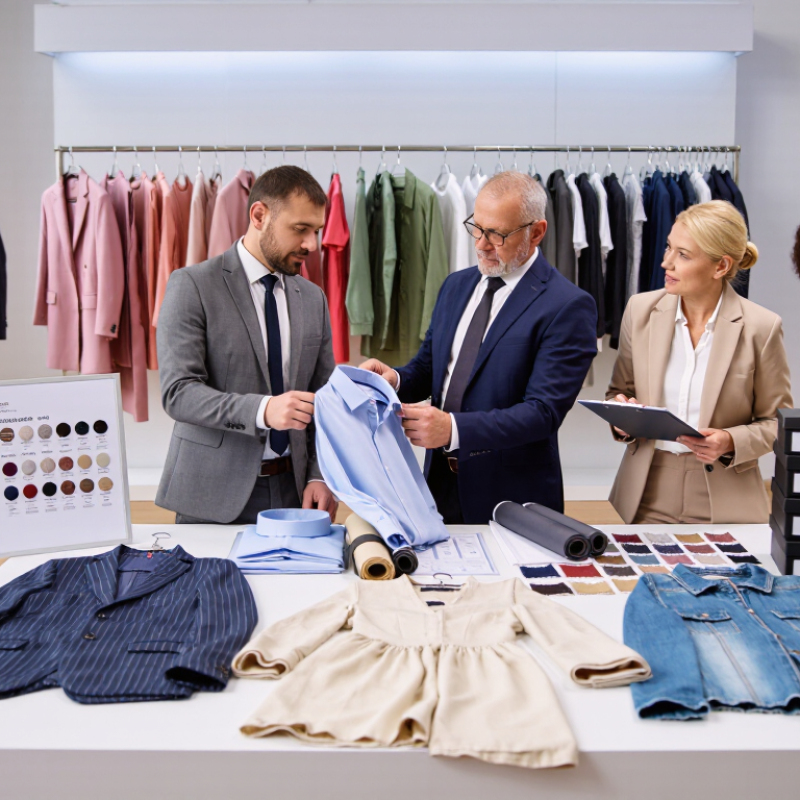
China Best French Clothing Wholesaler for Global Buyers?

China’s Apparel Wholesale Scale: $293.6 Billion in 2023 Textile Exports

China Best French Clothing Wholesaler for Global Buyers?

China’s apparel supply chain is not a small workshop story. The reported $293.6 billion in textile exports for 2023 shows its industrial depth. That scale connects fabric mills, dyeing units, pattern rooms, and export logistics. For buyers seeking French-style clothing, capacity can support varied cuts, seasonal colors, and controlled replenishment. The number is impressive. It is not a guarantee.

A reliable wholesaler should explain fabric composition, measurement tolerances, minimum order quantities, and production timelines in writing. Ask for pre-production samples. Check stitching at the shoulder, zipper alignment, button security, and wash behavior. I have found that a clear tech pack prevents more problems than persuasive sales language. Small details matter. A two-centimeter sleeve difference can increase customer returns. Buyers should also review quality procedures, worker safety documentation, packaging standards, and export records through appropriate independent checks.

Price comparisons need more than unit cost. Include sampling, alterations, freight, duties, inspection, and slow-moving inventory. French fashion often depends on proportion and finishing, not decoration alone. A capable Chinese wholesaler can adapt those details while maintaining consistent volume. Still, communication may fail around color names or fit expectations. Use physical swatches, graded size charts, and approved reference samples. Recheck every production run. Even experienced buyers sometimes trust the first successful shipment too much.

French Fashion Sourcing Criteria: Quality, Design, MOQ, and Compliance

China Best French Clothing Wholesaler for Global Buyers?

French fashion sourcing requires more than attractive sketches. Quality begins with fabric testing, stable stitching, accurate measurements, and controlled shrinkage. Ask for pre-production samples and inspection records before confirming bulk orders. Textile Exchange reports that global fiber production reached 124 million tonnes in 2023. This scale increases the need for traceable materials and responsible supplier checks.

Source: Textile Exchange, Materials Market Report 2024.

Design should match the target customer, not merely imitate runway trends. Share a clear tech pack with measurements, color references, trims, and grading rules. MOQ also matters. A low MOQ sounds efficient, but it may raise unit costs or reduce fabric choices. Request tiered prices and confirm whether reorders keep the same specifications. Compliance must cover fiber labels, care instructions, chemical restrictions, packaging, and destination-market rules. The EU General Product Safety Regulation also strengthens traceability expectations for many consumer products. Documentation is not decoration. It protects the buyer.

Tips: Test the sample twice. Check after washing. Keep written approvals. Ask for factory audit evidence, but review its date and scope. A certificate alone is not proof of daily performance. An honest sourcing process admits uncertainty, especially when colors, measurements, or delivery times change. That small weakness can reveal where stronger controls are needed.

How to Verify a Chinese French Clothing Wholesaler’s Certifications

China Best French Clothing Wholesaler for Global Buyers?

Choosing a Chinese wholesaler for French-style clothing requires more than checking photos and prices. Certification verification should begin with the supplier’s legal business license. The company name, registered address, and business scope must match the sales contract. Ask for current quality management certificates and textile safety test reports. Check the certificate number, issuing organization, approval date, and expiry date. A scanned document is only evidence, not proof.

Tips: Request the original file and verify it through the issuer’s official database or contact channel. Confirm that the certificate covers the actual factory, not a trading office. Compare the factory address with the audit report and production photos. Ask for recent test reports for fabric composition, colorfastness, and restricted substances. Small mismatches matter.

I have learned that verification often fails at the product level. A wholesaler may show a valid factory certificate, while the supplied garments come from another workshop. Request a production sample, packing details, and a written production location. Keep communication records. Visit the facility when possible, or use an independent inspection service. Do not rely on impressive seals alone. They can be outdated. I also review payment terms carefully, because certification checks cannot replace commercial judgment. A supplier with fewer documents may still be reliable, but unexplained gaps deserve direct questions and patience.

Comparing Prices, MOQs, Lead Times, and 2024 Global Apparel Demand

Global buyers comparing a French clothing wholesaler should examine landed cost, not only the unit price. The State of Fashion 2024 report forecasts global fashion growth of 2–4% in 2024. WTO’s 2024 trade outlook projected merchandise trade volume growth near 2.6%. Demand exists, but buyers remain cautious.

For stocked French apparel, practical quotes often range from €8–€25 per unit, depending on fabric, finish, and order size. MOQs may start near 50–300 pieces per style and color. Custom production commonly requires 300–1,000 pieces.

Stocked items can ship within 7–21 days. Custom orders may need 30–60 days. These are working benchmarks, not promises.

A low quote is not always a win. Numbers expose the gap. Freight, duties, packaging, and payment terms can change the final cost sharply. Buyers should request a landed-cost sheet and confirm Incoterms in writing.

My sourcing reviews also find that small MOQs sometimes increase unit prices by 15–30%. That trade-off may still protect cash flow. However, lead-time estimates can fail during seasonal peaks.

Ask for fabric availability, inspection timing, and a realistic dispatch date. The best supplier is not automatically the cheapest. It is the one that makes price, MOQ, quality, and delivery risk visible.

Selecting the Best Supplier Through Audits, Samples, and Buyer Reviews

Choosing a China-based wholesaler for French-style clothing requires evidence, not polished showroom images. An audit should confirm the legal entity, operating address, workforce records, fire controls, and subcontracting policy. Ask for dated documents and a live video walkthrough. Audit reports can miss seasonal subcontractors. That weakness matters.

Textile Exchange’s Materials Market Report 2024 estimates global fiber production reached 124 million tonnes in 2023 and could reach 160 million tonnes by 2030. This scale makes material traceability a practical sourcing issue, not a marketing detail. Request fiber composition, mill information, recycled-content evidence, and test reports. The OECD Due Diligence Guidance for Responsible Supply Chains in Garment and Footwear recommends risk-based checks across production tiers. One factory visit is not enough.

Approve samples before discussing volume. Measure GSM, shrinkage after three washes, colorfastness, seam strength, and size tolerance. Photograph each measurement. Keep a signed sample beside the first bulk shipment. Buyer reviews help, but inspect their dates, quantities, and complaint details; generic praise proves little. Fashion Revolution’s 2023 Transparency Index reported an average score of only 26% across 250 major fashion companies, showing how limited public disclosure remains. I would rather accept a slower supplier with imperfect but verifiable records than a cheap quote with missing evidence. That judgment can still be wrong. Recheck it every season.

FAQS

What quality checks should buyers request before placing a bulk clothing order?

Request pre-production samples and inspection records. Check fabric weight, stitching, measurements, and shrinkage. Wash the sample three times. Photograph each measurement. Keep records.

Why is fabric traceability important in fashion sourcing?

Large-scale fiber production increases sourcing risks. Ask for fiber composition, mill details, and recycled-content evidence. Traceable materials support clearer supplier checks. Marketing claims alone are not enough.

What information should a clothing tech pack include?

Include measurements, colors, trims, fabric details, and grading rules. Add tolerance limits and care instructions. A clear tech pack reduces avoidable misunderstandings. Some details may still need revision.

How should buyers evaluate minimum order quantities?

Ask for tiered prices at different quantities. A low minimum order may increase unit costs. It may also limit fabric or color choices. Confirm whether repeat orders keep identical specifications.

What should a supplier audit verify?

Check the legal entity, operating address, workforce records, and fire controls. Review the subcontracting policy carefully. Request dated documents and a live video walkthrough. One audit is not enough.

How can buyers test a clothing sample properly?

Measure GSM, shrinkage, colorfastness, seam strength, and size tolerance. Repeat key checks after washing. Keep a signed sample beside the first shipment. Small differences can become expensive.

Which compliance documents should clothing buyers request?

Request fiber labels, care instructions, chemical test reports, and packaging details. Confirm destination-market requirements before production. Keep written approvals and inspection evidence. A certificate alone proves little.

How useful are buyer reviews when selecting a supplier?

Reviews can reveal delivery problems, quality changes, and complaint patterns. Check review dates, order quantities, and specific details. Generic praise provides weak evidence. I may still be wrong. Recheck the supplier every season.

Conclusion

China has become a major hub for apparel sourcing, supported by approximately $293.6 billion in textile exports in 2023. For global buyers seeking a reliable French Clothing Wholesaler, the key considerations include fabric quality, accurate sizing, refined design, reasonable minimum order quantities, production consistency, and compliance with applicable safety and labor standards. Buyers should also assess whether suppliers can provide valid business registrations, quality management documents, product testing records, and other relevant certifications.

A thorough comparison of pricing, MOQs, lead times, customization capabilities, and supply stability is essential, especially as global apparel demand continues to change. The best supplier should be selected through a structured process involving factory audits, sample evaluation, transparent communication, and verification of buyer reviews. By combining documentation checks with practical testing and contract clarity, importers can reduce sourcing risks and build a dependable long-term wholesale partnership.

Ethan

Ethan

Ethan is a seasoned marketing professional with a deep-rooted expertise in our company's product offerings. With a passion for effective communication and brand storytelling, he skillfully engages with our clients through comprehensive blog articles published on our company website. His insights......