Voyage Paris Fashion Journal — Boutique Insights & Trends
French & Italian Wholesale Fashion Journal
Voyage Paris Boutique Buying Insights
Ladies Wholesale Boutique Fashion Advice London

Fashion & Wholesale Blog

Insights, trend updates, and expert buying guides for independent boutique owners.

0%

China remains a major sourcing destination for Women's Daywear, offering broad manufacturing capacity, flexible production, and competitive pricing. Yet selecting a dependable supplier requires more than browsing polished product photos. Global buyers must examine fabric consistency, sizing accuracy, sewing quality, minimum order quantities, lead times, and communication practices.

This guide introduces ten Chinese manufacturers serving different daywear needs, from lightweight cotton dresses to structured office separates and relaxed seasonal collections. Each company should be considered through practical evidence: factory experience, export history, sample development, quality-control procedures, and available compliance documentation. A capable manufacturer can explain fabric composition clearly, provide realistic timelines, and identify production risks before bulk ordering begins.

Details matter.

For example, a buyer should inspect seam strength after washing, compare color samples under natural light, and confirm whether measurement tolerances are documented. Product certifications and testing requirements may also vary by destination market, so buyers should verify current obligations independently. Factory visits, video audits, reference checks, and pre-shipment inspections can improve confidence, although none removes every risk.

The “top ten” label is useful, but it is not absolute. Supplier suitability depends on order volume, target customers, design complexity, budget, and delivery expectations. Some manufacturers may excel at fast sampling but offer limited customization. Others may provide strong quality control yet require higher minimum quantities. This guide offers a practical starting point, not a substitute for careful due diligence. That limitation deserves attention.
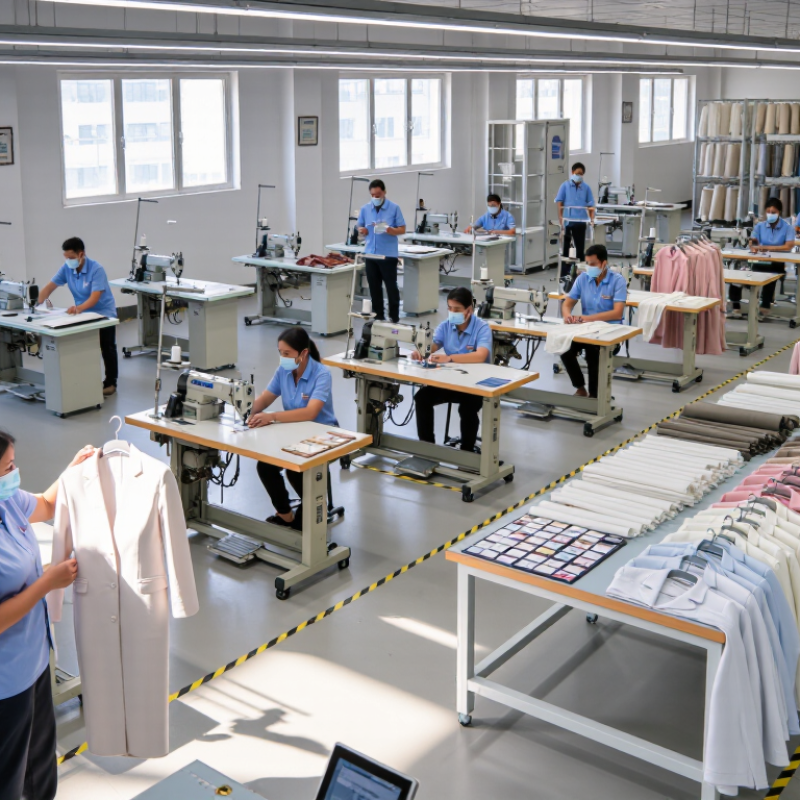
China Top 10 Womens Daywear Manufacturers for Global Buyers

What Women’s Daywear Manufacturers Produce in China

Women’s daywear manufacturers in China produce more than basic dresses. Their core output includes woven blouses, tailored trousers, skirts, knit tops, shirt dresses, and lightweight jackets. Many factories also handle fabric sourcing, pattern grading, sample development, and private-label production. Buyers can request cotton, linen blends, viscose, recycled polyester, or wrinkle-resistant fabrics.

The WTO’s World Trade Statistical Review 2023 reported that China supplied about 31% of global clothing exports in 2022. This scale supports broad material access and specialized production lines. The 2024 State of Fashion report projected only 2% to 4% growth for the global fashion market. Manufacturers therefore focus on flexible orders, faster sampling, and tighter inventory control.

Production details matter. A reliable supplier should provide measurement charts, fabric composition, shrinkage results, colorfastness tests, and inspection records. Ask for pre-production samples. Check stitching density, seam allowance, button strength, and pressing quality. Small and medium orders may receive careful attention, but capacity can vary by season. That is a weakness worth examining. A low quotation may hide weaker fabric, limited inspection, or slower corrections. In practice, clear specifications and staged approvals reduce these risks.

How to Evaluate China’s Women’s Daywear Suppliers

Evaluating China’s women’s daywear suppliers requires more than comparing catalog photos and quoted prices. Start with production evidence: factory address, workshop images, machinery lists, and recent quality records. Ask whether cutting, sewing, pressing, and packing happen under one controlled system. A polished showroom can mislead. Request a live video inspection or an independent audit. This reveals workflow, worker safety practices, storage conditions, and the supplier’s actual capacity. Look beyond the showroom.

Send a clear tech pack with measurements, fabric composition, color references, seam details, labeling needs, and tolerances. Then order a development sample. Check shrinkage after washing, stitch strength, button attachment, pilling, colorfastness, and fit across sizes. One attractive sample proves little. Ask for test reports from qualified laboratories when performance or safety claims matter. Confirm minimum order quantities, sample fees, lead times, payment stages, and rework procedures in writing. Vague answers often become expensive delays.

A dependable supplier communicates quickly but does not promise everything. Evaluate how the team handles a failed measurement or late fabric delivery. Their response shows more than a sales presentation. Request references from comparable export projects while protecting confidential business information. Review inspection checkpoints before bulk production, during sewing, and before shipment. A third-party final inspection can add useful distance, although it cannot replace clear specifications. I have found that low prices sometimes hide weak planning. Still, audits are not perfect. Keep a backup supplier and review performance after every order.

China’s Top Ten Women’s Daywear Manufacturers

China’s Top Ten Women’s Daywear Manufacturers represent a practical sourcing group for global buyers. They typically produce blouses, dresses, skirts, trousers, knit tops, and lightweight jackets. The selection should consider verified production capacity, fabric control, sample accuracy, and export experience. Rankings are not universal. Factory data changes quickly.

WTO trade data shows China remained the world’s largest clothing exporter, supplying roughly one-third of global clothing exports in 2022. This scale supports flexible sourcing for women’s daywear. Leading manufacturers often combine in-house pattern making with audited partner workshops. Buyers should check sewing lines, pressing areas, inspection points, and packing rooms. A 3,000-piece order may require different planning from a 300-piece test order. MOQ matters.

The strongest candidates also manage recycled polyester, cotton blends, linen-look fabrics, and low-impact dyeing. Textile Exchange reported that recycled polyester represented about 14% of global polyester production in 2022, showing rising material demand. Yet sustainability claims need documents, not attractive words. Ask for fiber certificates, laboratory reports, shrinkage results, and colorfastness records. McKinsey’s State of Fashion research continues to describe cautious consumer spending and slower fashion growth. That pressure makes accurate costing essential. Some suppliers still overpromise. Buyers should allow time for a second fitting, because the first sample is rarely perfect.

China Top 10 Womens Daywear Manufacturers for Global Buyers - China’s Top Ten Women’s Daywear Manufacturers
Rank Production Base Core Women’s Daywear Categories Suitable Buyer Segment Typical Production Strengths Common Order Range Export & Compliance Support
1 Guangzhou, Guangdong Dresses Blouses Two-piece Sets Fashion retailers, online labels and importers requiring frequent seasonal collections Fast sample development, broad fabric sourcing and flexible fashion production 100–500 pieces per style for many small-batch programs; larger runs negotiated by fabric and construction OEM/ODM capability; standard export documentation available upon request
2 Dongguan, Guangdong Casual Dresses Tops Skirts Mid-market brands and wholesalers seeking consistent repeat production Cut-and-sew efficiency, quality control systems and integrated supplier networks 300–1,000 pieces per style is common for repeatable production programs Pre-production samples, inline inspection and final inspection can be arranged
3 Shenzhen, Guangdong Contemporary Wear Workwear Minimalist Basics International brands prioritizing design accuracy and communication speed Product development, technical-pack execution and access to a wide logistics network Small trial orders may be accepted; production quantities depend on fabric and customization English-language communication and third-party testing coordination are commonly available
4 Humen, Dongguan Women’s Tops Shirts Lightweight Outerwear Wholesale distributors and private-label buyers with recurring seasonal demand High-volume apparel manufacturing, trim sourcing and standardized sewing operations 500–2,000 pieces per style is frequently used for wholesale-focused programs Size-set approval, carton packing and export shipping support are commonly offered
5 Shantou, Guangdong Printed Dresses Blouses Resort Daywear Value-focused retailers and buyers sourcing print-led commercial collections Print garment production, fabric availability and competitive manufacturing costs 200–1,000 pieces per style, depending on printing method and fabric requirements Fabric composition, colorfastness and dimensional-stability testing can be requested
6 Hangzhou, Zhejiang Elegant Dresses Blouses Office Daywear Contemporary fashion labels and department-store suppliers Design-oriented development, refined finishing and access to textile suppliers 300–1,000 pieces per style is typical for established buyer programs Material traceability and social-compliance audits may be supported by qualified facilities
7 Ningbo, Zhejiang Casual Dresses Knit Tops Everyday Separates Large importers, private-label programs and supermarket clothing suppliers Structured production planning, stable quality control and export-oriented operations 1,000+ pieces per style is generally more economical for factory-scale orders Container loading, carton marking and commercial export documentation are commonly supported
8 Suzhou, Jiangsu Structured Dresses Tailored Separates Premium Basics Premium retailers and buyers seeking precise construction and finishing Advanced garment workmanship, quality materials and detailed production control 500–2,000 pieces per style, with minimums influenced by fabric and finishing complexity Needle inspection, measurement control and third-party laboratory testing can be arranged
9 Nanchang, Jiangxi Affordable Daywear Cotton Dresses Basic Tops Mass-market retailers and buyers focused on cost-efficient core styles Competitive labor costs, repeat-style production and practical fabric utilization 500–3,000 pieces per style is generally suitable for cost-sensitive programs Basic quality inspection, packing specifications and export coordination are commonly available
10 Quanzhou, Fujian Casual Daywear Knitwear Travel Clothing Online retailers, regional distributors and lifestyle apparel buyers Knit garment production, practical styling and efficient repeat orders 300–1,500 pieces per style, subject to yarn, fabric and color requirements Custom labels, barcodes, polybags and export carton specifications can be supported

Buyer note: Order quantities, lead times, testing records, certifications and production capabilities vary by factory and product specification. Buyers should verify current factory credentials, samples, audit reports, material composition and quality standards before placing an order.

Comparing Product Range, Quality, Pricing, and Capacity

China’s leading women’s daywear manufacturers differ sharply in product range, quality, pricing, and capacity. Some focus on dresses, blouses, and soft tailoring. Others offer denim, knitwear, and coordinated sets. Buyers should request recent line sheets, size charts, fabric compositions, and production samples. A wide catalogue means little if fit approval is slow.

Quality requires measurable checks. Review shrinkage, colorfastness, seam strength, and measurement tolerance before placing bulk orders. Textile Exchange’s Materials Market Report 2024 estimates global fiber production reached 124 million tonnes in 2023. Polyester represented about 59 percent. This makes fiber traceability and recycled-content claims worth verifying, not merely accepting. Independent laboratory reports add useful evidence. Small defects become expensive after thousands of units.

Pricing should be compared through a landed-cost sheet, including fabric, trims, packaging, inspection, freight, and possible rework. Capacity also needs proof. Ask for monthly output, active production lines, peak-season utilization, and subcontracting controls. The World Trade Organization’s 2024 trade review shows apparel remains deeply integrated across global supply chains, so delivery risk can extend beyond one factory. A lower quotation may hide slower sampling or weaker quality control. No scorecard is perfect. I would weight repeatable quality above impressive capacity claims, while checking whether the factory can support small trial orders and later scale-up.

How Global Buyers Can Source Women’s Daywear Safely

China’s top 10 women’s daywear manufacturers can offer flexible production, varied fabrics, and competitive lead times. Global buyers should verify more than catalog photos. Request current business licenses, factory addresses, production capacity, and independent audit reports. A video tour helps, but it is not full proof. Ask for fabric composition, shrinkage results, colorfastness records, and children’s safety exclusions when relevant. Clear technical packs should show measurements, stitching, labels, packaging, and acceptable tolerances. Small details prevent expensive disputes.

Tips: Order samples before discussing large volumes. Test them after washing. Check seam strength, fabric recovery, odor, and shade consistency. Compare the approved sample with bulk production. Use a written inspection standard. Keep payment milestones linked to verified production stages. Confirm export documents, delivery terms, and product testing responsibilities before signing. Do not rely on informal promises.

A capable supplier should explain weaknesses, not only show polished samples. Ask how they handle late fabric arrivals, rejected panels, and changing size requirements. Check whether subcontracting is disclosed and controlled. Independent pre-shipment inspection adds useful evidence, especially for new suppliers. Yet inspections have limits. They cannot replace careful sampling or legal review. Buyers should confirm labeling, chemical, labor, packaging, and import rules in every destination market. Start with a manageable order. Reliability is earned through repeated checks, not one successful shipment.

FAQS

What types of women’s daywear can Chinese manufacturers produce?

Common products include blouses, trousers, skirts, knit tops, shirt dresses, and lightweight jackets.

Which fabrics can buyers request?

Options may include cotton, linen blends, viscose, recycled polyester, and wrinkle-resistant fabrics.

How should buyers evaluate garment quality?

Request measurement charts, shrinkage results, colorfastness tests, and inspection records.

Why is a pre-production sample important?

It reveals fit, fabric behavior, construction, and finishing problems before bulk production.

How can buyers compare supplier prices fairly?

Use a landed-cost sheet covering fabric, trims, packaging, inspection, freight, and possible rework.

How can buyers verify production capacity?

Ask for monthly output, active production lines, seasonal utilization, and subcontracting controls.

What should buyers check before placing a large order?

Request business documents, factory details, recent samples, technical packs, and independent audit information.

How can buyers reduce delivery and quality risks?

Start with a manageable trial order and use staged approvals.

Conclusion

China has become a major sourcing destination for Women's Daywear, offering a broad selection of dresses, blouses, skirts, trousers, knitwear, and coordinated outfits for different markets and seasons. This guide explains what Chinese manufacturers typically produce and how global buyers can evaluate suppliers by examining product specialization, fabric quality, workmanship, production equipment, certifications, communication, minimum order quantities, pricing, and delivery capability. It also presents a practical comparison of ten leading manufacturer types based on product range, quality consistency, pricing structure, customization options, and production capacity.

For international buyers, successful sourcing requires more than finding competitive prices. Buyers should verify company information, request samples, confirm specifications in writing, inspect production quality, clarify payment and shipping terms, and use reliable quality-control procedures before placing large orders. By comparing suppliers carefully and building transparent communication throughout development and production, buyers can reduce sourcing risks, maintain consistent standards, and establish dependable long-term partnerships for Women's Daywear.
Ethan

Ethan

Ethan is a seasoned marketing professional with a deep-rooted expertise in our company's product offerings. With a passion for effective communication and brand storytelling, he skillfully engages with our clients through comprehensive blog articles published on our company website. His insights......